Signal vs Telegram vs Threema vs Session: Privacy | Clam

Updated: Sep 22
"Private messenger" gets used as a single label for apps that are built very differently underneath. Encryption is only one part of the picture — how an app handles identity, metadata, and servers matters just as much, and this is exactly where these four apps diverge. This piece also places Clam in that landscape: a private messenger without a phone number, compared on the same criteria.
Encryption: The Part Most Apps Get Right
Signal, Threema, and Session all use end-to-end encryption by default for one-on-one conversations, meaning message content cannot be read by the provider.
Telegram is the outlier here. Its standard cloud chats are not end-to-end encrypted by default — they are encrypted between the app and Telegram's servers, but Telegram itself can technically access the content. Only "Secret Chats," a separate mode that has to be manually enabled per conversation and is tied to a single device, are end-to-end encrypted.
This distinction matters because many people assume all of Telegram works the way Signal or WhatsApp does. It doesn't, by default.
Identity: What You Need to Hand Over to Sign Up
This is where the real architectural differences appear.
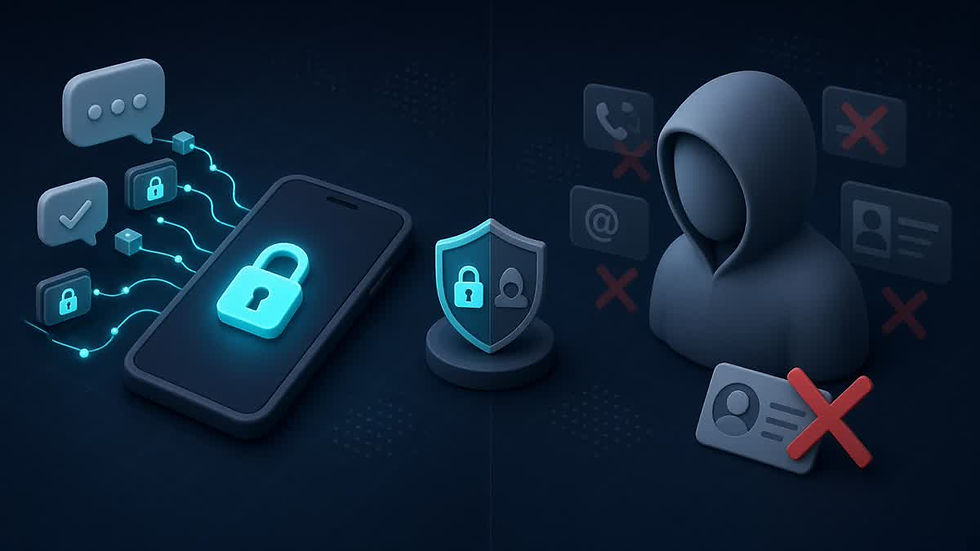
Signal requires a phone number to create an account. It has since added the option to hide that number behind a username for the contacts you talk to, but the number itself is still required at signup and tied to the account.
Telegram also requires a phone number to register.
Threema does not require a phone number or email. It generates a random Threema ID, and identity verification (if any) happens separately from account creation.
Session does not require a phone number or email either, and goes further by routing traffic through an onion-style network so the service itself has a harder time linking your identity to your activity.
The identity requirement is often the single biggest factor separating these apps in practice, because it determines whether your account can be tied back to a real-world identity from day one.
Metadata: What Each Service Can See, Even Without Reading Messages
Even with strong encryption, a service can see who is talking to whom and when, unless it is specifically designed to minimize that.
Signal keeps its metadata footprint intentionally small — its stated data collection is limited mainly to a phone number and the account's last active date, with no advertising model built on usage patterns.
Threema markets a "zero-metadata" approach: it avoids storing logs or connection data tied to a real identity, aided by not requiring a phone number in the first place.
Session takes a more infrastructure-heavy approach to the same goal, using onion routing so that no single point in its network sees both who sent a message and who received it.
Telegram, by contrast, stores contacts, message history for standard chats, and usage data on its servers as part of its cloud-based design.
Jurisdiction and Servers
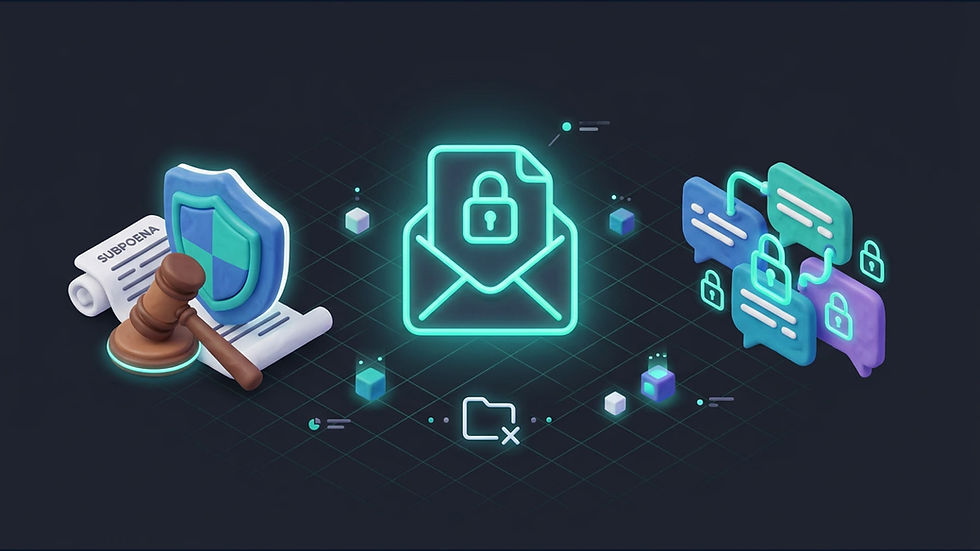
Where a company is legally based affects what it can be compelled to hand over, and to whom.
Signal is a US-based nonprofit, which places it under US legal jurisdiction, including frameworks like the CLOUD Act. Telegram has also faced legal pressure in multiple countries over its handling of user data and illegal content on the platform. Threema operates under Swiss law, which has comparatively strict data protection requirements. Session's decentralized routing model is designed specifically to reduce how much any single jurisdiction can compel out of the network.
None of this makes one legal jurisdiction universally "safe" — it simply means the answer to "who can request my data, and under what law" is different for each service.
Business Model: Why It's Worth Asking
How a company makes money is a privacy question, not just a business one.
Signal is funded as a nonprofit through donations. Threema uses a one-time paid model. Session is funded through its associated foundation and token ecosystem. Telegram is free to use, with revenue coming from Telegram Premium subscriptions and, on the broader platform, ad placements in certain public channels — not from user messages themselves, but still part of a different overall business structure than a small paid or donation-funded app.
A service that doesn't need to monetize your usage patterns has fewer structural reasons to collect them in the first place.
Where This Leaves the Comparison
None of these four apps is strictly "the most private" across every dimension. Signal offers the strongest combination of encryption, adoption, and independent audits, at the cost of a phone number requirement. Threema and Session go further in removing phone-number and metadata exposure, at the cost of a smaller network and, in Session's case, more friction in daily use. Telegram trades encryption-by-default for convenience and features, which is a meaningfully different privacy posture than the other three.
The right choice depends on what a person is optimizing for: broad adoption and simplicity, minimal identity exposure, or maximum metadata protection regardless of convenience.
How Clam Fits Into This Landscape
Clam is a private messenger without a phone number. On identity it sits with Threema and Session rather than Signal or Telegram: signup needs no phone number or email, and contacts are added by ID or QR code rather than an uploaded address book.
Messaging uses the Double Ratchet protocol with Sealed Sender for end-to-end encryption by default. The server is designed to hold only ciphertext and delete it after delivery, so message content is not kept in readable form on Clam's servers.
Local notes stay on the device; they are not synced as a cloud identity graph. Account access is restored with a recovery phrase instead of SMS or email reset — the same tradeoff other phone-number-free messengers make: you hold the keys, and losing the phrase means losing the account.
Compared with the four above: unlike Signal and Telegram, Clam does not bind the account to a phone number. Unlike Session's onion-routed network, Clam uses a conventional delivery path with sealed-sender-style metadata reduction rather than full onion routing. Unlike Threema's one-time paid Swiss product, Clam is a smaller independent project — stronger on identity minimization than Telegram, but without Signal's long public audit history. Architecture and independent audits are not the same thing, and both matter.
Final Thoughts
"Private messenger" is not a single standard — it's a set of tradeoffs between encryption, identity, metadata, jurisdiction, and business model. Comparing apps only by whether they use end-to-end encryption misses most of what actually determines how exposed your communication is in practice.
FAQ
Which messenger is more private: Signal or Telegram?
On default settings, Signal is more private for message content: chats are end-to-end encrypted by default. Telegram's standard cloud chats are not; only Secret Chats are end-to-end encrypted, and they must be enabled per conversation. Signal still requires a phone number; Telegram does too.
Which messengers don't require a phone number?
Threema, Session, and Clam do not require a phone number (or email) to create an account. Signal and Telegram both require a phone number at signup.
Does end-to-end encryption hide metadata?
No. End-to-end encryption protects message content, not necessarily who talks to whom or when. Metadata exposure depends on the service's design — Signal minimizes stored metadata, Threema and Session aim to reduce identity-linked logs, and Telegram's cloud model stores more account and chat metadata by design.
How does Clam compare to Signal for privacy?
Signal leads on adoption, maturity, and public audits, but requires a phone number. Clam does not require a phone number or email, uses end-to-end encryption by default with Sealed Sender, keeps local notes on-device, and recovers access with a recovery phrase. Clam is a smaller independent app, so it does not yet match Signal's long audit track record.
What is a recovery phrase in a messenger without phone/email?
A recovery phrase is a secret word list that restores account access when there is no phone number or email to reset the account. If you lose the phrase and the device, the account cannot be recovered by SMS or support — which is the cost of not tying identity to a phone or email.
Comparing private messengers? See how Clam's secure chat app without phone number signup approaches privacy on iOS.