What Happens to an Encrypted Chat If a Company Is Legally Compelled to Hand It Over

A common question about private messengers is what happens if a government or law enforcement agency demands data from the company behind the app. The honest answer depends entirely on what the company actually has access to — and that varies far more than most people assume.
The Company Can Only Hand Over What It Has
This is the most important fact in this entire topic: a company cannot disclose data it does not possess.
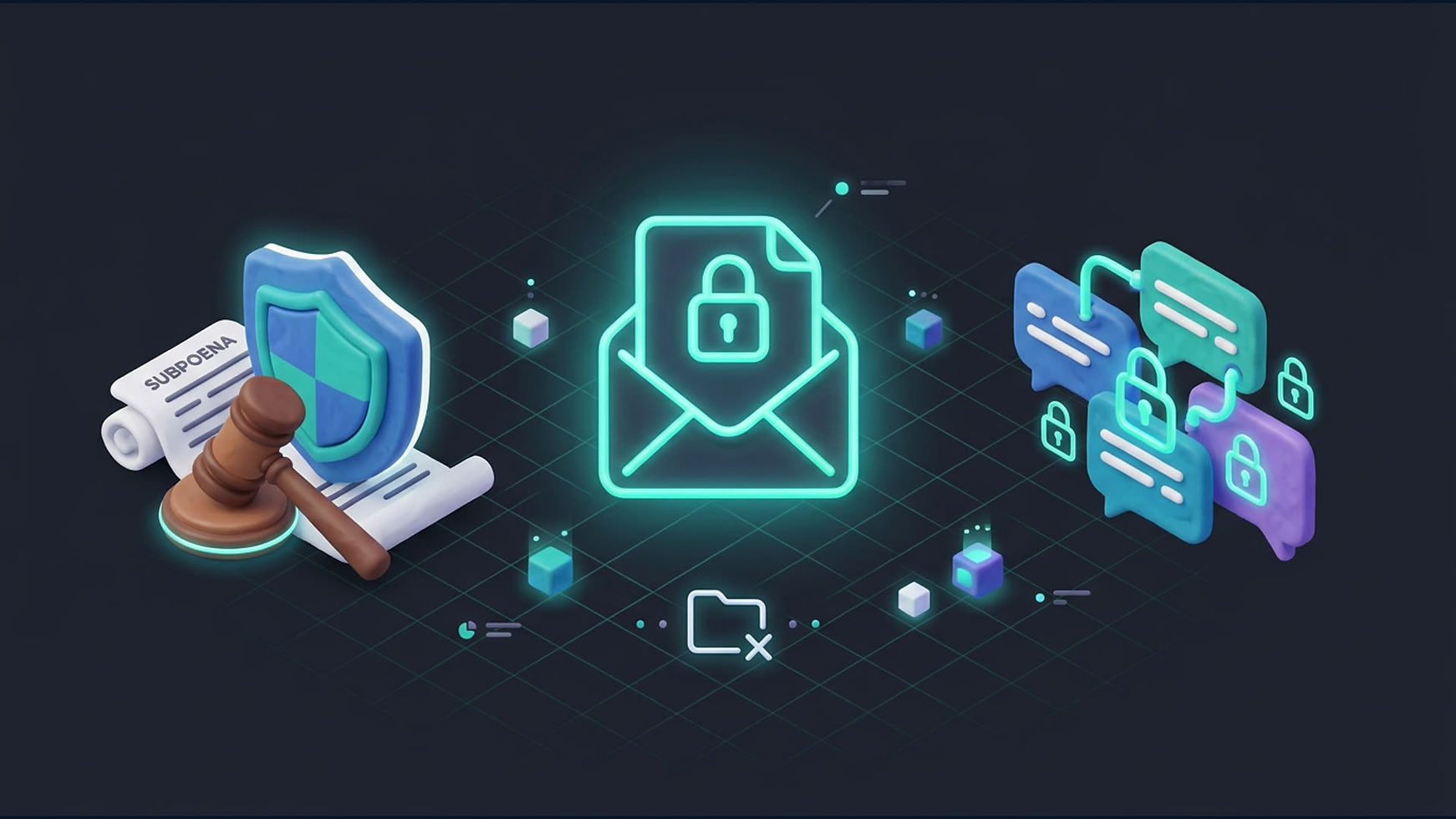
If message content is end-to-end encrypted and the company never holds the decryption keys, then even a valid, enforceable legal order compelling the company to hand over message content will not produce readable messages. The company can comply fully with the order and still have nothing usable to give, because the content simply isn't accessible to it.
This is different from a company being unwilling to comply. It's a structural limitation: the architecture itself determines what can be handed over, regardless of the company's intentions or legal obligations.
What a Company Can Usually Hand Over, Even With Strong Encryption
Encryption protects content. It does not automatically protect everything else a service touches. Depending on how a messenger is built, a legal request might still be able to obtain:
Account creation information, such as a phone number, email address, or IP address used at signup
Timestamps of when an account was created or last active
Metadata about message delivery, such as when messages were sent, to whom, and how often
Any data stored unencrypted on the server, such as profile information
Backups, if a service stores chat backups on its own servers rather than only on the user's device
This is why encryption alone does not fully answer the question "what can be obtained about me through a legal request." The identifiers and metadata a service collects at the account level matter just as much as how it encrypts messages.
Why Data Minimization Matters Here
A service that never collects a piece of information cannot be compelled to hand it over, because it simply doesn't exist in the company's systems.
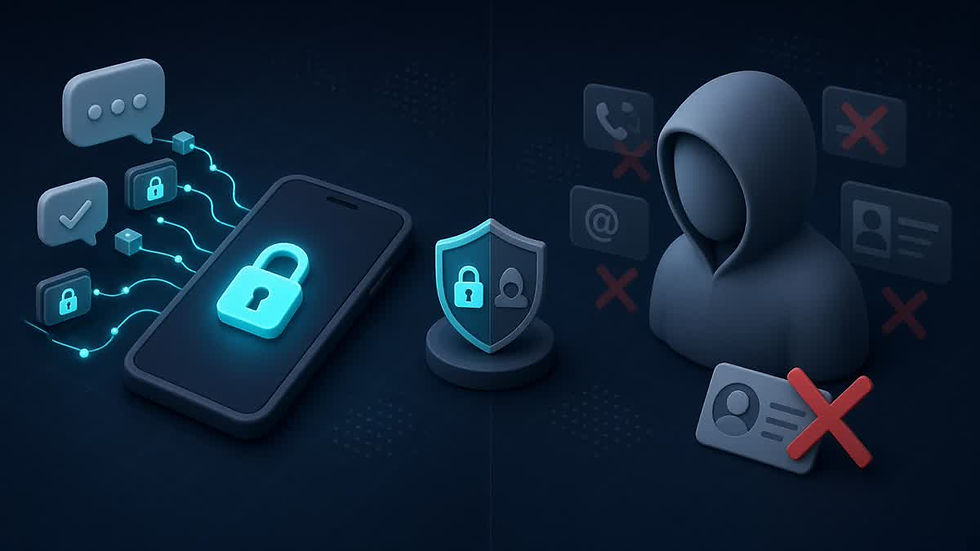
This is the practical reason data minimization is treated as a core privacy principle, not just a nice-to-have. A messenger that doesn't require a phone number to sign up has no phone number to disclose. A service that doesn't upload contact lists has no contact graph to hand over. A server that deletes ciphertext after delivery has nothing left to disclose about that message once it's been delivered.
Data minimization and encryption work together: encryption protects what exists, and minimization reduces what exists in the first place.
Transparency Reports and What They Actually Tell You
Many messaging companies publish transparency reports, disclosing how many legal requests they received and how they responded. These reports are useful, but they answer a narrower question than people often assume: they show how a company responded to requests, not what it was capable of handing over in principle.
A company that reports "we complied with a request by providing metadata" is telling you something real about its architecture — specifically, that it had metadata to hand over. A company that reports it could not provide message content, even when compelled, is confirming that its encryption model genuinely keeps content out of its reach.
Reading these reports with this distinction in mind is more useful than treating "number of requests received" as the headline statistic.
What This Means for Choosing a Messenger
Two questions are worth separating when evaluating a messenger's resilience to legal requests:
Is message content end-to-end encrypted, with the company never holding decryption keys?
What account-level information and metadata does the company collect and retain, independent of message content?
A messenger can score well on the first question and poorly on the second, which still leaves a meaningful amount of information exposed to a legal request even though message content itself stays protected.
How Clam Approaches This
Clam is designed so that message content is end-to-end encrypted using the Double Ratchet protocol with Sealed Sender, meaning the company does not hold the keys needed to read message content, regardless of any request it might receive.
On the account side, Clam does not require a phone number or email to create an account, and the server stores only ciphertext, which is deleted after delivery rather than retained. This is a deliberate design choice: the less that's collected and stored in the first place, the less exists to be requested later.
No architecture can promise that a company will never be asked for anything. What an architecture can determine is how much of what's asked for actually exists to be handed over.
Final Thoughts
The question "could my messenger be forced to hand over my data" has a more nuanced answer than yes or no. It depends on what the service collects, what it encrypts, and what it retains after a message has already been delivered. Understanding this distinction is more useful than treating "encrypted" as a single guarantee that covers everything a service knows about you.