Anonymity vs Privacy: Why They're Not the Same Thing

These two words get used interchangeably in conversations about messaging apps, but they describe different protections. Knowing the difference matters, because a messenger can offer one without the other, and assuming otherwise leads to a false sense of security.
What Privacy Means
Privacy is about controlling who can see the content and context of what you do. A private conversation is one where the substance of what was said stays between the people involved.
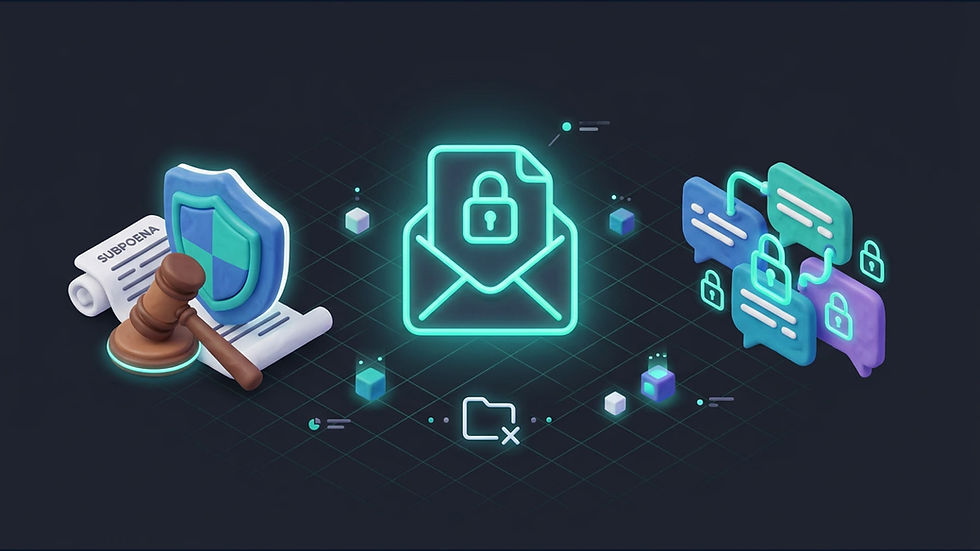
End-to-end encryption is fundamentally a privacy tool. It ensures that the content of a message can't be read by anyone other than the sender and recipient, including the company operating the service.
Privacy does not require hiding who you are. Two people who both know each other's real identities can still have a fully private conversation, in the sense that no third party can read what they said.
What Anonymity Means
Anonymity is about disconnecting an action from an identity. An anonymous message is one where the content might even be fully visible, but no one can determine who sent it.
A public forum post made without a real name attached is anonymous but not private — anyone can read it, but they can't easily trace it back to a specific person. This is the opposite combination from a private-but-not-anonymous conversation between two known contacts.
Why a Messenger Can Have One Without the Other
These two properties operate independently, and it's worth walking through the combinations directly:
Private and anonymous: content is hidden from outsiders, and the identities of the participants are also hidden or unlinkable to a real-world identity.
Private but not anonymous: content is encrypted and hidden, but the account is tied to a phone number, email, or other identifier that connects it to a real person.
Anonymous but not private: identity is hidden or hard to trace, but the content itself is visible to others, such as a public post made under a pseudonym.
Neither private nor anonymous: both the content and the identity behind it are visible or knowable.
A messenger that encrypts message content but requires a phone number to sign up falls into the "private but not anonymous" category. The conversation is protected from being read, but the account itself can still be linked back to a real identity through the phone number, the carrier, or contact-matching against other users.
Why This Distinction Matters in Practice
Someone whose primary concern is that their conversations not be read by a company, a hacker, or an eavesdropper is mainly looking for privacy. Encryption addresses this directly.
Someone whose primary concern is that their communication activity not be traceable back to them at all — for example, a journalist protecting a source, or someone in a situation where being identified as a participant in a conversation carries real risk — needs anonymity as well, not just privacy.
These are different threat models, and they call for different tools. Strong encryption alone does not protect against an account being traced back to a real person through the identifiers required to create it.
Where Metadata Fits In
Metadata sits at the intersection of these two concepts. Even with strong content privacy through encryption, metadata — who talked to whom, when, and how often — can undermine anonymity if it's collected and can be linked to real identities.
This is why an app can be fully end-to-end encrypted and still fail to provide meaningful anonymity, if it requires identifying information to sign up and retains metadata about usage patterns.
How Clam Approaches Both
Clam is designed around both properties rather than just one. Messages and files are protected through end-to-end encryption with Sealed Sender, addressing privacy directly.
On the anonymity side, Clam does not require a phone number or email to create an account, and contacts are added by ID or QR code rather than through an uploaded address book. This reduces how easily an account can be tied back to a real-world identity from the moment it's created.
No architecture can guarantee perfect anonymity — a determined and well-resourced adversary can sometimes correlate activity through other means. But minimizing what's collected at the account level is the foundation that makes stronger anonymity possible in the first place.
Final Thoughts
Privacy protects what was said. Anonymity protects who said it. A messenger can offer strong versions of one while offering very little of the other, and understanding which one you actually need is the first step to choosing the right tool, rather than assuming "encrypted" automatically means "anonymous."
If privacy without phone-number identity matters to you, start with Clam private messenger without a phone number.