Group Chats and Privacy: What Changes When There Are More Than Two People

Most explanations of encrypted messaging focus on a conversation between two people. Group chats introduce a different set of problems, and understanding them matters if you assume a "private" messenger behaves the same way in a group as it does one-on-one.
Why Groups Are Harder to Protect Than One-on-One Chats
End-to-end encryption between two people is a relatively contained problem: one sender, one recipient, one shared secret to establish. A group chat with ten participants has to deliver the same message securely to nine different recipients, each with their own device and their own keys, while keeping the same guarantees intact for everyone.
This adds real complexity. Group encryption schemes have to handle people joining and leaving, messages arriving in different orders on different devices, and the fact that any single group member typically has access to the same message history as everyone else.
What "End-to-End Encrypted Group Chat" Actually Guarantees
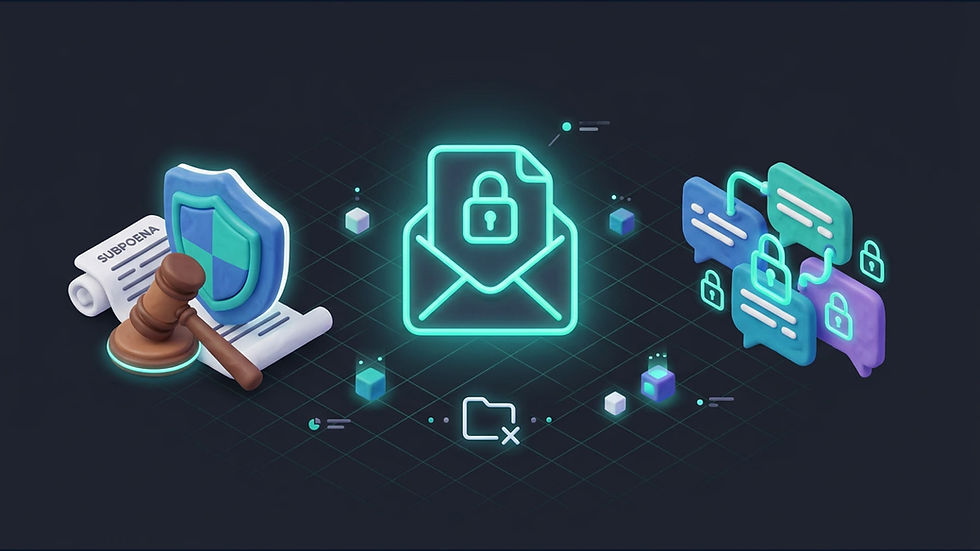
When a service says a group chat is end-to-end encrypted, it's generally guaranteeing that message content can't be read by the server as it's relayed to each participant. That's a real and meaningful guarantee, but it doesn't cover everything people sometimes assume.
It typically does not mean:
That the server can't see who is in the group, or its member list
That the server can't see how many messages are sent, or when
That every group member is protected equally against every other member — a member can always screenshot, forward, or copy what they see
Encryption protects the transport of content from the server. It does not create trust between the people in the group, and it doesn't change the fact that anyone with access to a conversation can always share what they've seen outside of it.
The Human Factor: Trust Doesn't Scale Automatically
In a two-person conversation, privacy mostly depends on the platform. In a group, it increasingly depends on the people.
Adding each additional participant increases the number of people who could, intentionally or not, forward a message, take a screenshot, or simply mention the conversation's content to someone outside the group. This isn't a flaw in encryption — it's a structural reality of group communication that no cryptography can solve, because it doesn't happen on the wire, it happens after the message has already been decrypted and read.
This is why the honest advice for sensitive information is usually the same regardless of which app is used: the size of the group is itself a privacy variable, separate from the app's technical guarantees.
What Can Actually Leak in a Group, Even With Strong Encryption
A few specific things are worth being aware of in group settings:
Membership visibility. In many apps, all members can see who else is in the group, which is itself a form of information — knowing that a specific set of people are in contact with each other.
Admin capabilities. Group admins in many messengers can add or remove members, sometimes see more metadata than regular members, and in some app designs, have elevated visibility into the group's activity.
Message history for new members. Some apps allow new members to see prior conversation history when they join a group; others don't. This changes what a newly added person can access, and it's worth knowing which behavior a given app uses before adding someone to a sensitive group.
Forwarding and screenshots. No encryption scheme prevents a group member from forwarding a message or taking a screenshot, because at that point the content has already been decrypted for them.
How to Think About Group Privacy in Practice
A few habits reduce risk regardless of which app is used:
Treat group size as a privacy factor. A two-person conversation and a fifty-person group carry very different exposure, even on the same platform.
Check whether new members can see message history before adding someone to an existing group.
Be aware of who has admin privileges in a group, and what that role can see or control.
Remember that encryption protects the message in transit, not what a recipient chooses to do with it after reading.
How Clam Approaches Group Chats
Clam extends the same end-to-end encryption used in one-on-one conversations to group messaging, so group message content is protected from the server in the same way individual messages are.
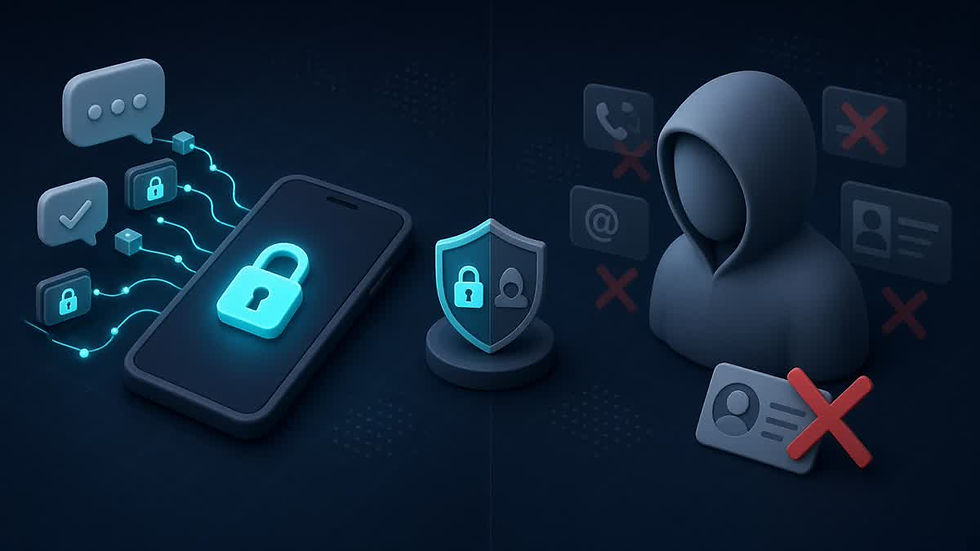
Beyond encryption, the same account-level privacy principles apply: no phone number is required to create an account or join a group, and contacts are added by ID or QR code rather than through an uploaded address book, which limits what the service can infer about a group's membership from external contact data.
As with any messenger, the people in a group ultimately determine what happens to a message after it's been decrypted and read — no architecture changes that part of the equation.
Final Thoughts
Group chats inherit the same encryption guarantees as one-on-one conversations, but they add a layer of exposure that has nothing to do with cryptography: more people means more opportunities for a message to travel beyond the group, intentionally or not. Understanding this distinction helps set realistic expectations about what "private" actually means once more than two people are involved.